VITALITY HEALTH CENTER
  • Home
  • Special Offer
  • Meet the Team
  • What We Treat
    • Arthritis
    • Auto Accident Injuries
    • Back Pain
    • Balance and Gait Disorders
    • Bulged and Herniated Disc
    • Fibromyalgia
    • Chronic Pain
    • Dizziness and Vertigo
    • Elbow, Wrist and Hand
    • Foot and Ankle Pain
    • Headaches and Migraines
    • Hip and Knee Pain
    • Neck Pain
    • Neurological Conditions
    • Planter Fascitiis
    • Posture
    • Prenatal and Postnatal Pregnancy
    • Repetitive Stress Injuries
    • Sciatica and Back Pain
    • Scoliosis
    • Sports Injuries
    • Subluxation
    • TMJ Dysfunction
    • Upper Back Pain
    • Work Injuries
  • Services Provided
    • Adjustments
    • Chiropractic Care
    • Corrective Exercises
    • Intersegmental Traction
    • Physiotherapy
    • Spinal & Postural Screenings
    • Trigger Point Therapy
    • Workers' Compensation
  • Testimonials
  • Payments
  • Contact Us
  • Wellness Blog
  • Products
    • Braces
    • Pillows
    • Plantar Fasciitis Products
    • Rollers, Massagers and KT Tape
  • Exercises
  • CHIROPRACTIC BENEFITS
  • Home
  • Special Offer
  • Meet the Team
  • What We Treat
    • Arthritis
    • Auto Accident Injuries
    • Back Pain
    • Balance and Gait Disorders
    • Bulged and Herniated Disc
    • Fibromyalgia
    • Chronic Pain
    • Dizziness and Vertigo
    • Elbow, Wrist and Hand
    • Foot and Ankle Pain
    • Headaches and Migraines
    • Hip and Knee Pain
    • Neck Pain
    • Neurological Conditions
    • Planter Fascitiis
    • Posture
    • Prenatal and Postnatal Pregnancy
    • Repetitive Stress Injuries
    • Sciatica and Back Pain
    • Scoliosis
    • Sports Injuries
    • Subluxation
    • TMJ Dysfunction
    • Upper Back Pain
    • Work Injuries
  • Services Provided
    • Adjustments
    • Chiropractic Care
    • Corrective Exercises
    • Intersegmental Traction
    • Physiotherapy
    • Spinal & Postural Screenings
    • Trigger Point Therapy
    • Workers' Compensation
  • Testimonials
  • Payments
  • Contact Us
  • Wellness Blog
  • Products
    • Braces
    • Pillows
    • Plantar Fasciitis Products
    • Rollers, Massagers and KT Tape
  • Exercises
  • CHIROPRACTIC BENEFITS
Picture
Vitality Health Center, White Bear Lake, Excellence in Chiropractic Care
submit a request for an appointment
Picture

Trigger Point Massage Therapy

Picture
If you’re experiencing muscle pain, you may benefit from trigger point therapy. This is a type of massage that focuses on specific areas of the body that are known to cause pain. This guide will teach you everything you need to know about trigger point therapy, including what causes them, how to find them, and how to treat them.

What Is A Trigger Point - A trigger point is a pressure-sensitive area in the muscle that is frequently linked with pain and stiffness. Trigger points can be extremely painful, limiting your range of motion and making it difficult to do your daily activities.
Dr. Janet G. Travell conducted the first modern scientific study of trigger points in the early 1900s by Dr. Janet G. Travell. She’s an American physician considered the pioneer of this field. In her studies, Dr. Travell observed that trigger points were a major source of pain in many of her patients. She went on to develop a system for identifying and treating these points, which is still used today.

Different Types Of Trigger Points - There are three types of trigger points: active, passive, and satellite. Active trigger points are painful when touched and can cause pain in other areas of the body. Passive trigger points are not always painful when touched but may cause pain in other areas of the body. Satellite trigger points are similar to active ones but are not as painful.

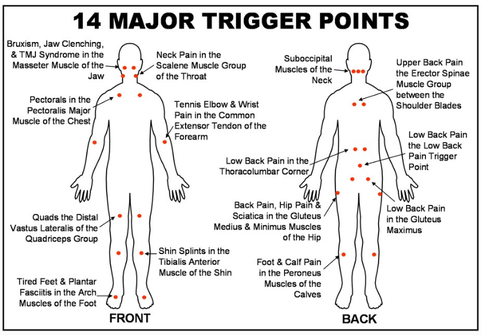
Trigger points can occur anywhere in the body but are most common in the neck, shoulders, back, and hips. Everyone may get them, although some individuals get a greater amount or have more discomfort from them. Moreover, no one is sure what causes them.

What Makes Trigger Point Painful - Theoretically, trigger points are taut bands of muscle and fascia tissue that become rigid. Hence, they restrict blood flow to muscle tissue. When this happens, muscle tissue is put into a state of metabolic crisis.
​
The muscle needs oxygen and other nutrients to heal. However, due to the tightness, oxygen and nutrients can’t reach the muscle. The cycle of pain, less blood flow, and pain start and can be hard to break.
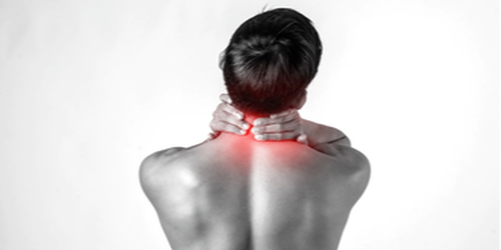
However, the pain from a trigger point can vary depending on the individual. For some people, it may feel like a dull ache, while for others, it may be more of sharp pain. The pain may also radiate from the trigger point to other areas of the body. For example, a trigger point in the shoulder may cause pain to radiate down the arm.
Moreover, there are a few things that can increase your risk of developing trigger points, including:
  • Tight muscles
  • Poor posture
  • Inactivity or too much activity
  • Muscle overuse or injury
  • Stressful lifestyle

How To Check If You Have Trigger Points - If you’re unsure whether or not you have a trigger point, there are some tell-tale signs and symptoms. Here’s a quick checklist:
  • Do you have localized pain in your muscles?
  • Is the pain worse when pressure is applied to the muscle?
  • Do you experience referring pain, meaning that the pain radiates from the trigger point to another area of your body?
  • Is the pain worse at certain times of the day or after certain activities?
  • Do you have a reduced range of motion in the affected muscle?
  • Do you feel fatigued in the affected muscle?
  • Does the muscle feel tight or knotted?
If you answered yes to most of these questions, you might have a trigger point. Trigger points can be painful and frustrating, but there are treatments available.  

What Is Trigger Point Therapy - Trigger point therapy is a type of massage designed to trigger point pain in specific areas of the body. These points, also called knots, are usually located in muscle tissue and can cause pain when they become irritated or inflamed. Often, this pain is felt in other parts of the body as well due to the way that the nervous system is connected.

History Of Trigger Point TherapyIn the late 1950s, while working in a lung and heart hospital, Dr. Janet Travell was struck by the commonality of pain symptoms she found across hospital patients. She was astonished to discover that the most common complaint was ordinary back, shoulder, or neck discomfort, even when a patient had a fatal condition. 

She was concerned since none of these individuals had verifiable evidence of an illness or condition that may explain their pain issues. During physical exams, Dr. Travell discovered that virtually all patients had isolated painful areas in their skeletal muscles. Dr. Travell started a lifetime study of these sensitivity sites, which she dubbed trigger points.

Her study gave rise to what is now known as Trigger Point Therapy. Nowadays, a licensed massage therapist usually performs trigger point therapy and uses their hands or elbows to apply pressure to the affected areas. Sometimes, other tools may be used as well, such as heat packs or cold compresses. This treatment aims to release the muscle’s tension and reduce the pain that is being felt.
While trigger point therapy can be an effective pain treatment, it’s important to remember that it isn’t a cure. That being said, it can be a helpful way to manage pain and improve quality of life. If you are dealing with chronic pain, talk to your doctor about whether trigger point therapy might be right for you.

How Trigger Point Therapy Works - Our muscles are made up of individual muscle cells called myocytes. These myocytes are held together by a protein called collagen. The collagen forms a sheath around the muscle cell. This collagen sheath is called the endomysium. The endomysium also attaches each muscle cell to its neighbor. So, if you were to take a cross-section of muscle, it would look kind of like a bunch of hot dogs all lined up next to each other, with the collagen sheath holding them all together.
Now, let’s talk about what happens when a muscle gets tight or knotted. When a muscle gets tight, it’s usually because one or more of the individual muscle cells has become shortened. This can happen for a variety of reasons, but the most common is simply overuse. When a muscle cell becomes shortened, it pulls on the collagen sheath, which pulls on the neighboring muscle cells. This can cause the entire muscle to become tight and knotted.

So, how does trigger point massage therapy work? By applying pressure to the knots in the muscle, we can release the tension in the individual muscle cells. This allows the muscle to return to its normal length. As the muscle cells return to their normal length, the pressure on the collagen sheath is released, and the neighboring muscle cells are no longer being pulled. This can provide relief from pain and tension in the muscle.
If you’re dealing with tight muscles, trigger point massage therapy may be a good option for you.

Different Methods of Trigger Point Therapy - Before discussing the different Trigger Point Therapy techniques, it’s essential to discuss a frequent approach to alleviate muscular ailments: muscle stretching.
Stretching the muscles alone isn’t effective for relieving trigger point pain. Moreover, it may only worsen the pain. Hence, it should be avoided as a trigger point therapy method.

Nevertheless, there are a number of efficient trigger point therapy procedures that include muscular stretching. All of these procedures use augmentation measures that significantly enhance the clinical efficacy of stretching.
Here are the different types of trigger point therapy methods:

Manual Trigger Point Therapy - Manual Trigger Point Therapy is one of the most popular and well-known types of massage. It’s a great way to relieve pain and tension in your body, and it can be done by yourself or with the help of a partner.
Trigger point therapy is based on the theory that certain points in your muscles can become tight and irritated, which can cause pain in other parts of your body. By applying pressure to these points, you can relieve the pain and tension.
There are a few different techniques that you can use to find and apply pressure to these trigger points. One can use your fingers or a tennis ball to massage the muscle. Another is to use a foam roller.
To find the trigger points, you can either feel for them yourself or have someone else do it for you. Once you’ve found them, you’ll want to apply pressure for 20-30 seconds and then release. You can repeat this process several times until the pain has subsided.
Manual trigger point therapy is a great way to relieve pain and tension in your body. It’s safe and effective and can be done by yourself or with the help of a partner. If you’re looking for a way to reduce stress and improve your overall health, consider trying this technique.

Trigger point injections - Trigger point injections are one of the most effective treatments for myofascial pain syndrome. By injecting a local anesthetic into trigger points, you can quickly relieve muscle tension and pain. 
Trigger point injections work by interrupting the flow of electrical impulses between the muscles and the brain. When this happens, the muscle relaxes, and the pain disappears. The injections can be done with a needle or with a special pen-like device that delivers the medication through a small, thin tube.
Trigger point injections are usually given in three to five sessions, spaced one to two weeks apart. Each session lasts about 15 minutes, and most people report significant pain relief after just one or two treatments.

Spray and Stretch - Dr. Travell created the Spray and Stretch trigger point release technique. It entails spraying on a surface anesthetic while stretching the muscle group comprising the trigger point.
The spray is applied to the area of the skin where trigger points cause discomfort. It also momentarily blocks (or distracts) the neurological system’s sense of pain. The actual loosening of the trigger point is accomplished by stretching the muscle. Moreover, the spray’s ability to inhibit the pain reaction allows the stretch to relax the trigger point.
Spray and Stretch is a very powerful technique for relieving trigger points. But its therapeutic use needs significant expertise to be truly effective.
Trigger Point Pressure Release and Micro-stripping TreatmentsThis method is often referred to as ischemic compression. It’s a release method that is frequently used and includes applying precise hand pressure to relax the muscle tension at a trigger point. Moreover, This technique has two efficient variations:
Sustain Pressure Approach - The sustained pressure approach requires the therapist to touch the trigger point with their thumb, fingertip, or elbow. Then, gradually apply pressure, maintain it for 4 to 8 seconds, and release it gradually. The therapist typically performs the application of pressure three to six times.
Micro-stripping Release Technique - The micro-stripping release technique entails applying a brief stripping stroke over the trigger point. It utilizes a supported thumb contact (thumb-over-thumb). This approach is quite successful in releasing the trigger point’s constricted fibers.
In this approach, the therapist puts pressure on the trigger point on one side. Then, the pressure is gently transferred to the opposite side of the trigger point. It’s important to note that the action never slides across the skin. Instead, the skin is moved across the muscle underneath.


Benefits of Trigger Point Therapy - Trigger point treatment has several advantages, making it an excellent alternative to conventional painmanagement approaches. Here are some of the most significant advantages:
Trigger point treatment has several advantages, making it an excellent alternative to conventional pain management approaches. Here are some of the most significant advantages:
Better Circulation - Improved circulation is one advantage of trigger point therapy. When muscles are taut, they might impede blood circulation. This may result in various issues, including tiredness, headaches, and vertigo. Trigger point treatment may assist in releasing contracted muscles and enhancing circulation. This may assist enhance your energy levels and general health.
Reduced Stress and Tension - Muscle tension may also contribute to stress and tension. Trigger point therapy may help alleviate tension and stress by releasing knots in the muscles. This can result in an overall sense of relaxation.
Increased Mobility and Flexibility - If your muscles are stiff, it may be difficult to move freely. This might reduce your range of motion and make it challenging to perform daily tasks. Trigger point treatment may assist in relaxing tense muscles and enhancing mobility.
Additionally, tight muscles might make it challenging to accomplish a complete range of motion. This might restrict your mobility and make some tasks difficult. Trigger point treatment may assist in releasing contracted muscles and increasing flexibility.
Higher Energy Levels - When your muscles are tense, it may drain your vitality. This is because the body must compensate for the tightness by working harder. Trigger point treatment may assist in releasing contracted muscles and boosting energy levels.
Better Sleep - Additionally, tight muscles might make sleeping difficult. This is because they might induce pain and discomfort, making falling and maintaining sleep hard. Trigger point treatment may assist in releasing contracted muscles and enhancing sleep.
Pain Relief From A Headache - The head and neck are one of the most typical locations for tense muscles. This may cause great strain and stress, leading to headaches. Trigger point treatment may assist in the relaxation of tense muscles in the head and neck, hence alleviating headache discomfort.

Why Choose Vitality Health Center? We have an excellent reputation, both with treating patients and providing guidance on corrective care. 

If you are suffering from pain, call Vitality Health Center at 651-773-9414.​ 

Vitality Health Center serves patients in White Bear Lake, White Bear Township, Gem Lake, Little Canada, Vadnais Heights, Mahtomedi, Maplewood, North St. Paul, Shoreview, Oakdale, Lake Elmo, Woodbury, Arden Hills, North Oaks, Pine Springs, Grant and surrounding areas. 

​

Vitality Health Center 
Chiropractic White Bear Lake

1310 Hwy 96 E
​Ste 110
White Bear Lake, MN 55110
HOURS:
Monday 
9:00am - 6:30pm
Tuesday 3:00pm - 6:00pm
Wednesday 9:00am - 6:30pm
Thursday 9:00am - 6:30pm
Friday 9:00am - 1:00pm
Saturday Office Closed
Sunday Office Closed


VISIT US
All Rights Reserved. Vitality Health Center l 1310 Hwy 96 E, Suite 110 White Bear Lake, MN 55110 l 651-773-9414